Early history
1880 Thomas Elliott is granted his first licence to drive a hackney carriage.
1885 He obtains has his first licence for a vehicle, a horse-drawn Landau.
1888 Thomas Elliott acquires his first horse-drawn charabanc, with an omnibus
licence.
By December he is using the trading name ‘Royal Blue’.
1911 Thomas Elliott died. The company is then run by Elizabeth (his wife),
their three sons and is known as Elliott Bros, although vehicles show Royal Blue.


Motorcoaches
1912 Royal Blue acquire their first motor vehicles - a pair of Unic landaulettes.
Horse drawn vehicles start being phased-out.
1919 Use of motor charabancs resumes after World War I.
During a nationwide strike on the railways in Summer, Royal Blue start offering stranded holidaymakers’ transport home, with journeys to many towns & cities
across southern England.
1920 In May, Royal Blue start a regular long-distance express service between
Bournemouth and London. They acquire premises in Rutland Road, Bournemouth, for their works and garage.
Expansion
1921 The Bournemouth - London service becomes twice daily.
1923 Royal Blue motorcoaches change from solid to pneumatic tyres.
1928 Royal Blue obtained licences to pick-up & set-down on-route between Bournemouth & London with the service running three times a day all year.
The network expands rapidly, with new services from Bournemouth to Birmingham,
Bristol, Ilfracombe, Margate, Plymouth, Weston-Super-Mare, and services from London to Weston-Super-
Mare and Plymouth.
1931 Bournemouth bus & coach station opens - Royal Blue coaches use the lower
level; Hants & Dorset local buses use the upper.


Amalgamation
1934 Associated Motorways formed, with Royal Blue being one of the 6 partners.
1935 Elliott Bros sell Royal Blue to the Tilling Group. The express services pass to Southern National &
Western National & are merged with their own routes. Express routes from 'Tourist' (Southampton) & 'Silver Cars' (Exmouth) added. All use the Royal Blue brand name. Excursions & tours pass to Hants & Dorset.
Head Office becomes Queen Street, Exeter. Some functions still at Bournemouth.
1942 Most express services are withdrawn for the war - some continue as
‘limited stop’ services where
there is no railway alternative.
Post War Renewal
1946 Royal Blue express services restart in April, with the pre-war network gradually restored by 1949. Demand for coach travel is high.
1948 First delivery of post-war new coaches - Bristol ‘L’ chassis. 45 in fleet by the end of the decade.
1949 Tilling Group passes to British Transport Commission under the
Government’s nationalisation plans. Royal Blue becomes state-owned.
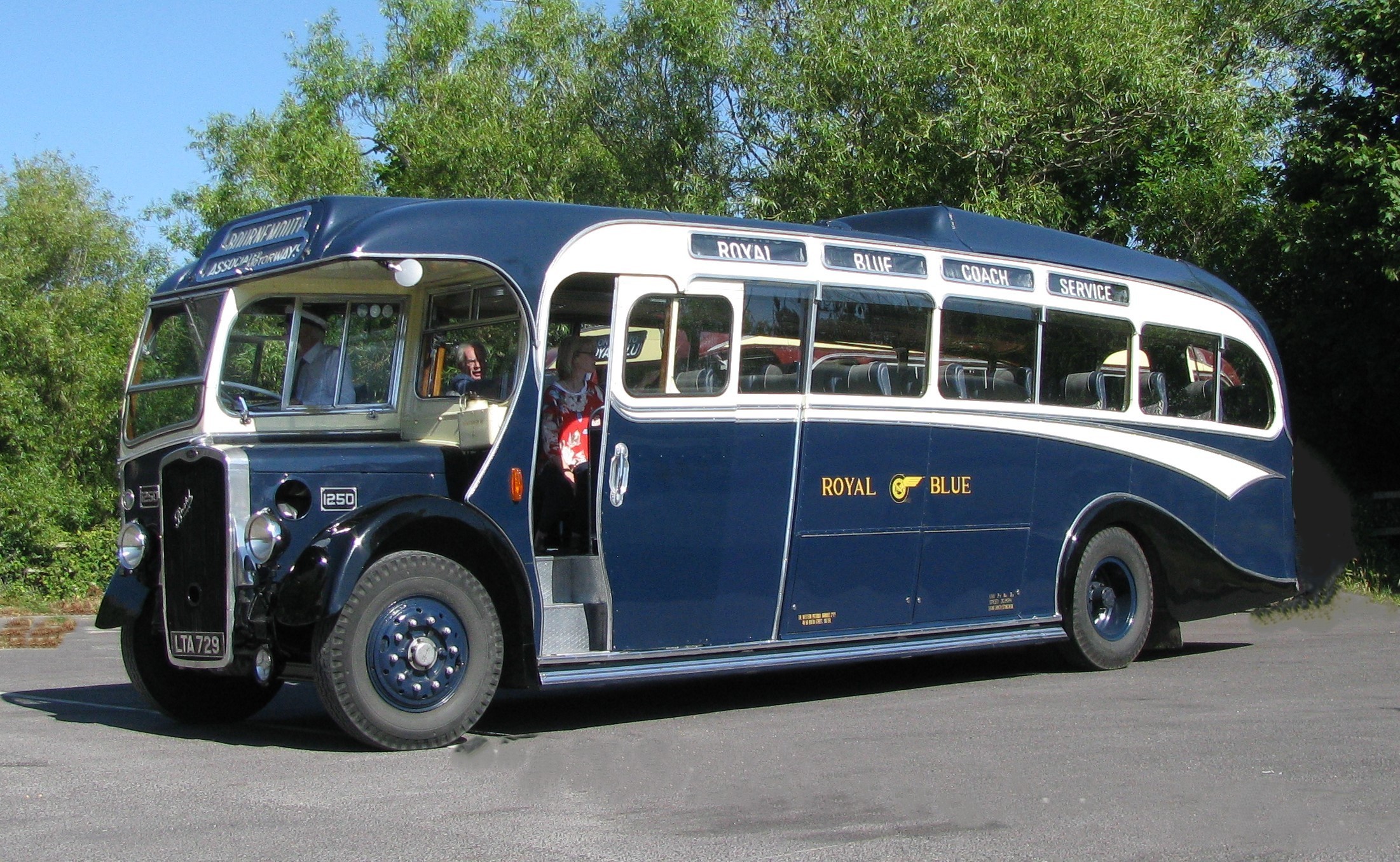
1950 A further
24 of the longer Bristol 'LL' (30-foot long) type delivered (pictured).

Golden Age
1951 The Festival of Britain in London requires many extra services.
1952 Royal Blue take delivery of their first ‘LS’ coaches (example pictured).1953 Last batch of coaches to have a roof luggage rack were delivered. The Coronation of Queen Elizabeth II led to many additional journeys to/from London.
1955 Services expanded - more overnight & non-stop journeys introduced.
1958 New routes from Home Counties towns to the South Coast introduced.
Swinging Sixties
1961 Tamar bridge opens, west of Plymouth, offering a new route into Cornwall.
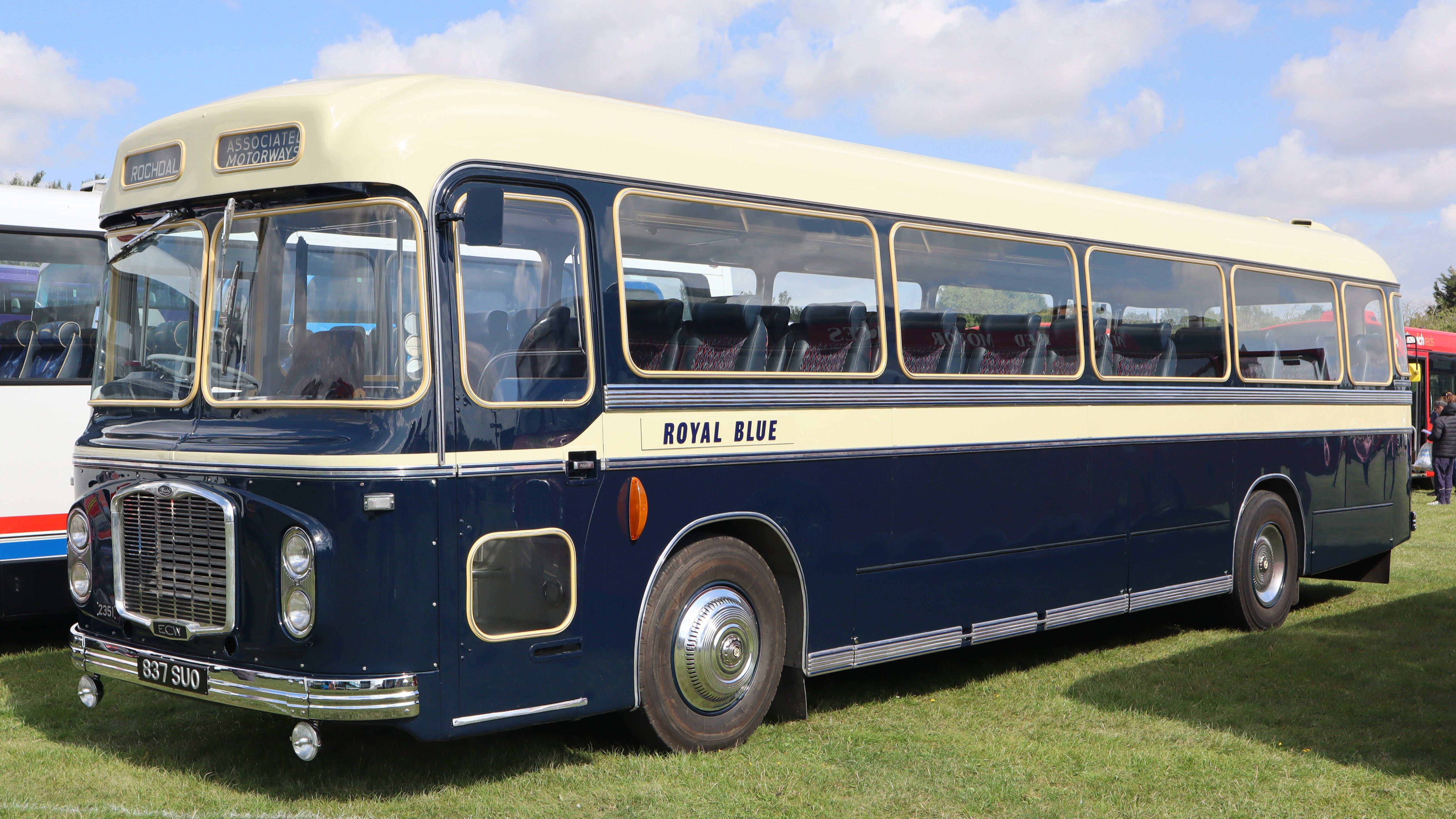
1962 Speed limit for coaches is raised to 40-mph, enabling faster journeys in 1963.1964 Royal Blue gets their first Bristol ‘RELH’ coaches - have a rear engine, air
suspension & are 36ft-long (the first is pictured).
1965 Royal Blue coaches carry 1.5 million passengers journeys - their peak.
1967 Coaches permitted to travel up to 70-mph on motorways
1969 The state-owned National Bus Company is formed, it assumes control of
Royal Blue (also,
Southern National, Western National).
Finale
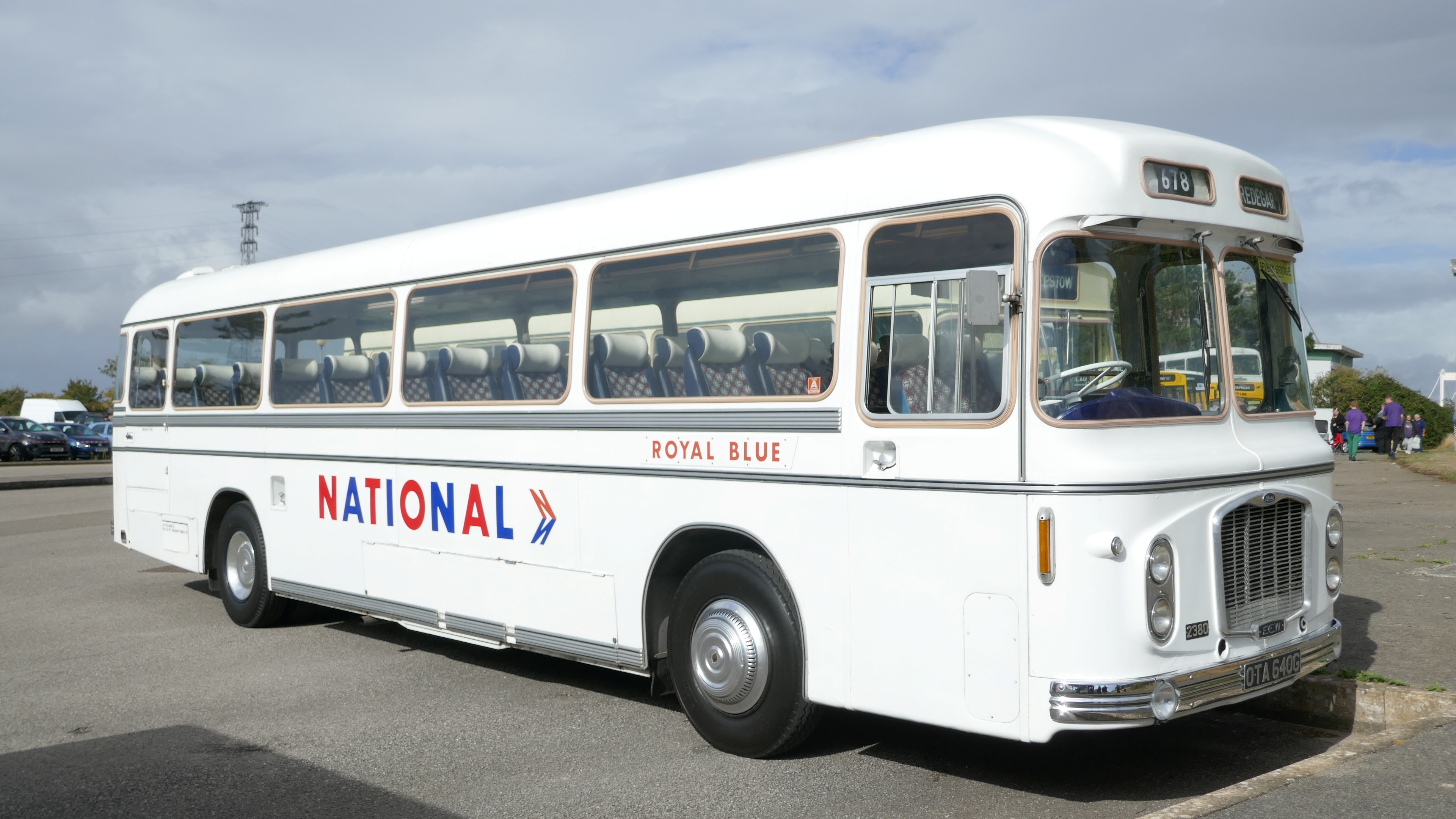
1972 NBC introduces all-white ‘NATIONAL’ coach livery, with just a small Royal
Blue name on vehicles (example shown).
1980 Deregulation of coach services - National Express expands network &
makes greater use of motorways to reduce
journey times.
1986 National Express removes the name Royal Blue from coaches. After 98-
years the name Royal Blue slips into history.
2026 National Express continues to be Britains largest operator of timetabled
express coach services.
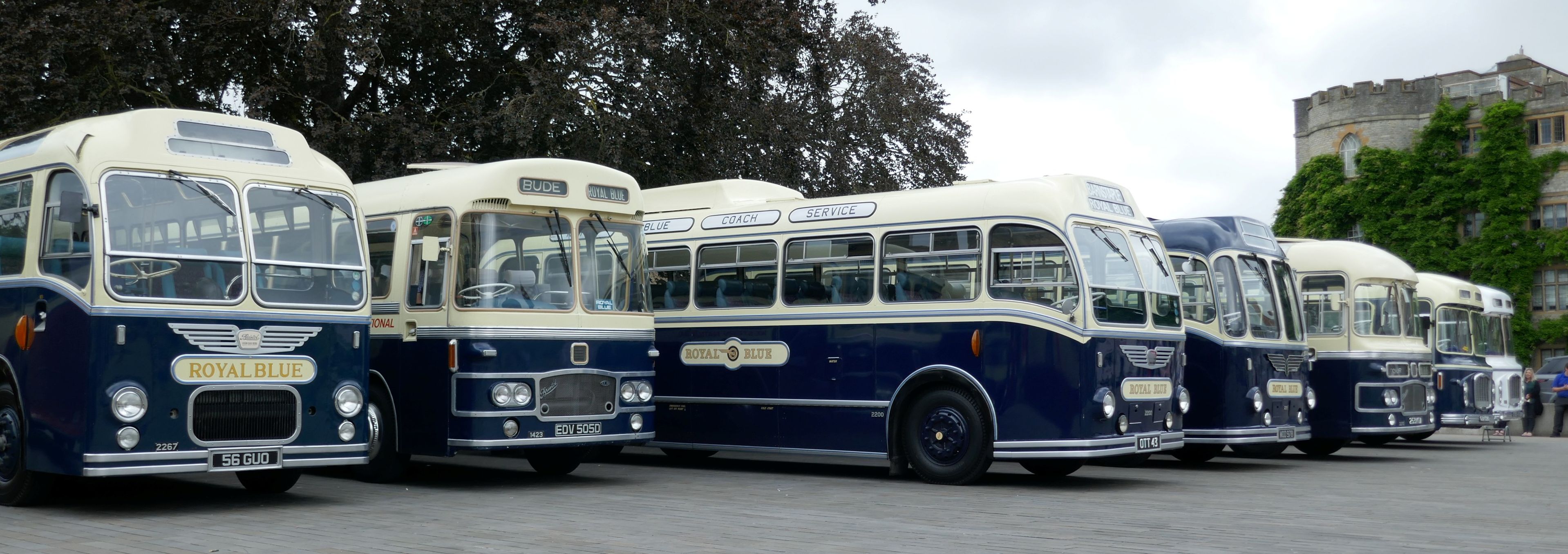
In preservation
Further reading
A History of Royal Blue Express Services
by R.C. Anderson & G.G.A. Frankis. Published 1969 & 1985.
Wheels to the West
by Clem Preece (Mr Royal Blue). Published 1974.
by Clem Preece (Mr Royal Blue). Published 1974.